

Smarter Freezer Monitoring: A Data-Driven Approach to Sustainability and Lab Efficiency
 Priya Vijayakumar


A Growing Challenge for Biopharma Labs
Biopharma laboratories depend heavily on ultra-low temperature (ULT) freezers to preserve critical research materials. However, these indispensable assets come with challenges that are often overlooked. ULT freezers can consume 8-33 kWh of energy per day and place an additional burden on heating and ventilation systems. The combined energy footprint rivals the daily consumption of three average US households combined.
For labs under increasing pressure to reduce their carbon footprint and optimize operational costs, smarter freezer management is no longer optional—it’s essential.
Rethinking the Problem to Solve
A lot of focus has gone into changing temperature setpoint from -80C to -70C to gain energy efficiency as part of sustainability initiatives. The problem with this approach is two-folds,
First, the original study that encouraged this practice was based on a very small data set and current data shows that depending on the make, model, health and user behavior of the freezer, there are no energy efficiency gains by changing the setpoint and in fact causes poor freezer performance in some models.
Second, the real energy impact comes from
- Reducing fleet size
- Moving freezers that are rarely opened from lab spaces with high air exchange rates to on-site or off-site storage areas
- Inventorying freezer contents
- Understanding actual heat load impacts from freezers
- Using data to identify freezers that need to be prioritized for maintenance, poor maintenance results in 30 to 100% more energy usage than datasheet
- Picking the correct model for the application
Analysis of a Freezer Fleet at a Site
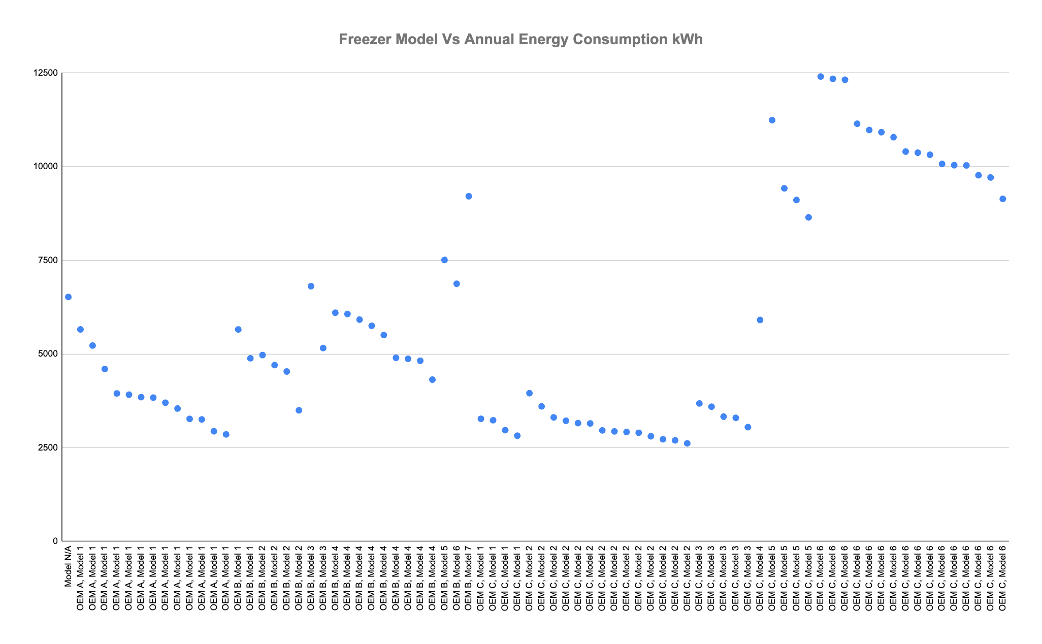
At a large Pharma R&D site, the analysis of 78 ultra-low temperature freezers showed that 64% of freezers averaged less than 2 door openings per day during the weekdays, highlighting the opportunity to inventory and organize contents that need to be accessible quickly vs stored at on-site or off-site freezer farms. The energy footprint of these rarely opened freezers was 296,786 kWh annually or 124Mt of CO2, and this energy footprint is nearly doubled when heating and ventilation requirements for these freezers are included. Freezer models significantly underperforming in energy efficiency contributed to nearly 68,601kWh of energy waste. Nearly 50% of the freezers had average temperatures of -82oC to -89.9oC pointing to poor maintenance practices.
The graph below shows the energy performance of the freezers vs the datasheet across the various models at the site.
Transforming Freezer Monitoring with WattIQ
WattIQ addresses these challenges with an innovative, manufacturer-agnostic freezer monitoring solution designed to optimize lab resources, improve sustainability, and prevent costly disruptions.
1. Smarter Alerting
Traditional alert systems often lead to “alert fatigue,” where irrelevant or frequent notifications result in critical warnings being overlooked. WattIQ eliminates this issue by using advanced sensor data and time-series analysis to distinguish between normal operations and actual anomalies. This ensures that alerts are actionable, and timely, and prevent costly oversights.
2. Anomaly Detection
With WattIQ, equipment that requires maintenance or repair can be identified before complete failure occurs. Advanced algorithms analyze power usage, door activity, and temperature data to spot declining performance, helping labs prevent disruptions and protect valuable samples.
3. Energy Efficiency
Operating a single ULT freezer at -80°C can cost thousands of dollars annually in energy consumption. WattIQ’s monitoring solution provides insights into freezer efficiency, allowing labs to make informed decisions about repairs, replacements, or upgrades
The Broader Impact: Sustainability and Savings
Efficient freezer management reduces operational costs and plays a pivotal role in sustainability. ULT freezers are a known contributor to high energy usage in laboratories, among the most energy-intensive spaces in institutions. By identifying and addressing inefficient equipment, labs can significantly reduce their environmental impact while ensuring research continuity.
Real Solutions for Lab Space Challenges
In today’s biopharma landscape, space, and resource constraints are common. WattIQ helps labs make better use of existing assets by:
- Reducing unnecessary equipment purchases
- Freeing up valuable lab space
- Improving overall lab efficiency
Moving Toward Smarter Labs
Freezer monitoring is more than an operational tool—it’s a step toward smarter, more sustainable laboratories. For biopharma labs looking to optimize their cold chain, prevent equipment failures, and reduce environmental impact, WattIQ provides the data-driven insights needed to thrive in a competitive industry.
Ready to revolutionize your lab’s freezer management? Contact us to learn how WattIQ can support your operations today.
Priya Vijayakumar
